By John Ragsdale, SVP Marketing, Kahuna Labs
Every support leader will acknowledge the same issue: cases are not well documented.
Despite clear guidelines, quality reviews, and ongoing coaching, most support tickets still fail to capture everything that actually happened during the troubleshooting process. This is not a new problem, nor is it one that organizations have ignored. In fact, many have invested significant time and effort attempting to improve documentation quality. Yet the problem persists.
The reason is simple. It is not a discipline issue. It is a structural one.
Where Troubleshooting Actually Happens
A support ticket rarely reflects the full reality of how an issue was diagnosed and resolved.
In practice, troubleshooting extends well beyond what is recorded in the case management system. Engineers collaborate in Slack channels, conduct Zoom calls and remote sessions, analyze logs in backend systems, and often rely on real-time experimentation within the customer’s environment. Critical decisions are made dynamically, based on experience, context, and evolving signals.
What ultimately gets captured in the ticket is typically a partial summary. It may include references to actions taken—such as collecting logs or scheduling a call—but often lacks the detailed narrative of what was discovered, why certain steps were taken, and how those decisions led to resolution.
From an organizational perspective, this creates a fundamental problem. The knowledge exists, but it is not captured in a form that can be reused.
Why Case Completeness Matters
Case documentation is not simply an administrative requirement. It is the foundation of institutional knowledge within a support organization.
When similar issues arise, engineers rely on historical cases to guide their approach. A well-documented case can provide insight into which questions to ask, which diagnostics to run, and which signals are most relevant in narrowing down the problem space. It can significantly accelerate time to resolution.
However, when key steps are missing, each new case becomes a largely independent exercise. Engineers are forced to reconstruct the diagnostic process from scratch, even when similar issues have been encountered before. This leads to longer resolution times, duplicated effort, and inconsistent outcomes.
More importantly, it prevents organizations from scaling knowledge effectively. Instead of building a cumulative understanding of how problems are solved, knowledge remains fragmented and largely dependent on individual experience.
What the Data Shows
At Kahuna, we analyze historical support data as part of every proof of value engagement and generate a Data Quality Report. One of the key metrics we evaluate is the Completeness Score™, which measures how thoroughly a case documents the troubleshooting process.
Across millions of cases, the results are remarkably consistent. Only 15–20% of cases achieve a completeness score of 5 out of 5, indicating that they contain a fully documented, step-by-step resolution narrative. Nearly half of all cases score 3 out of 5 or lower, meaning they are missing critical elements required to understand how the issue was actually resolved.
These findings highlight a significant gap between how support knowledge is assumed to be captured and how it actually exists in practice.
Why Traditional Approaches Fall Short
Most organizations attempt to address this issue through process improvements. They introduce stricter documentation standards, implement quality review programs, and provide coaching to support engineers.
While these efforts are well intentioned, they do not address the underlying reality of how support work is performed. Engineers are primarily focused on resolving customer issues efficiently. Reconstructing every step of the troubleshooting process after the fact is time-consuming and often impractical, particularly in high-volume or high-pressure environments.
Additionally, retrospective quality reviews are inherently limited. They typically cover only a small percentage of cases, and when gaps are identified, the information required to fill them may no longer be readily available. As a result, documentation remains incomplete, and the problem persists.
From Individual Tickets to Reconstructed Knowledge
If individual cases cannot be relied upon as complete records, then knowledge cannot be built from any single ticket. It must be reconstructed across multiple cases.
This is where AI introduces a fundamentally different approach.
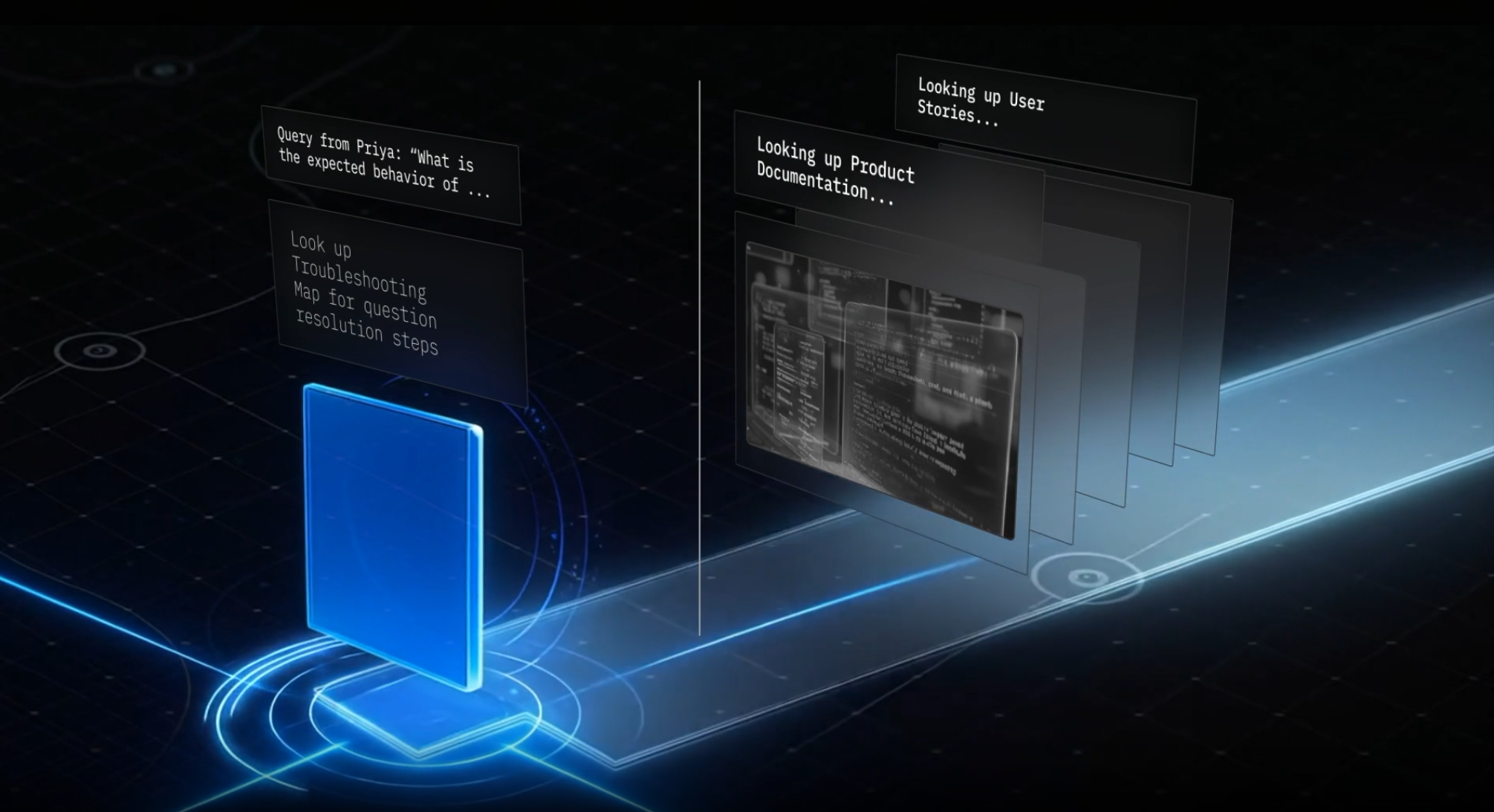
Rather than treating support tickets as complete sources of truth, Kahuna AI augments them by reconstructing the full troubleshooting process. This involves integrating information from multiple sources, including Zoom transcripts, Slack conversations, backend diagnostic activity, Jira tickets, knowledge articles, and relevant product documentation.
By assembling these elements, the system creates a comprehensive, step-by-step narrative of how each issue was actually diagnosed and resolved. This enriched dataset provides a far more accurate representation of real-world troubleshooting.
Replicating Tribal Knowledge
When augmented cases are analyzed collectively, patterns begin to emerge. Missing steps become visible, and the structure of effective troubleshooting can be identified.
What emerges is not simply a collection of documented fixes, but a representation of how experienced engineers think. It captures the sequence of decisions, the conditions under which specific actions are taken, and the signals that guide the diagnostic process.
This is often referred to as tribal knowledge—the implicit understanding that exists within experienced teams but is rarely documented in a structured way.
By reconstructing and analyzing this knowledge, Kahuna AI transforms it into a dynamic Troubleshooting Map™. This map provides dynamic contextual guidance to support engineers, helping them determine the next best action based on the specific conditions of the case.
Improving Completeness in Real Time
In addition to reconstructing historical knowledge, Kahuna AI also improves documentation quality moving forward.
The system calculates a Completeness Score™ in real time as engineers work on a case. When gaps are identified—such as missing details from a log analysis or an undocumented conversation—the system prompts the engineer to capture the necessary information before the case is closed.
Organizations can also establish minimum completeness thresholds, requiring that cases meet a defined standard before closure. This approach not only improves documentation quality but also ensures that new cases continuously enhance the underlying knowledge system.
A Shift in How Knowledge Is Defined
For many years, support organizations have treated the ticket as the system of record. However, tickets were never designed to fully capture the complexity of real-world troubleshooting.
They provide fragments of the process, but not the complete picture.
The implication is significant. Support knowledge does not reside in individual tickets. It emerges from patterns across them.
As technology environments become more complex and customer contexts more variable, the limitations of document-based knowledge systems become increasingly apparent. The future of support knowledge lies in systems that can reconstruct and interpret the full diagnostic process, rather than relying solely on static documentation.
Conclusion
Incomplete case documentation is not simply a quality issue. It is a structural limitation of how support knowledge has traditionally been captured.
Attempts to improve documentation through process alone have delivered limited results because they do not align with how support work actually happens.
The opportunity lies in a different approach: using AI to reconstruct the full troubleshooting process, capture implicit knowledge, and provide contextual guidance for future cases.
In doing so, support organizations can move beyond fragmented documentation and toward a more scalable, accurate, and actionable model of knowledge.
Leave a Reply