Transforming Support Tickets Into Reusable Knowledge Assets
By Shanu Vashishtha, Deep Learning Engineer, Kahuna Labs
The Fundamental Challenge
In traditional support operations, engineers receive tickets without context. They must begin from uncertainty: requesting diagnostics, gathering specifications, and iteratively narrowing the problem space.
The critical issue emerges after ticket closure. Closed tickets accumulate with highly variable documentation quality. A ticket might contain initial diagnostic questions, a reference to log collection, followed by “Scheduled a Zoom call” and “Closing as resolved”—with no resolution details, verification steps, or technical narrative.
This represents a fundamental failure of knowledge capture. The resolution information exists but not where organizational processes require it: within the ticket itself. Incomplete documentation translates to duplicated diagnostic effort, extended MTTR, and the inability to build scalable institutional knowledge.
The Completeness Score™: A Systematic Quality Metric
Kahuna’s Completeness Score is a 0-5 rating scale that measures how thoroughly the troubleshooting process was documented. The central question: can another engineer, encountering a similar issue six months later, follow the documented diagnostic trail and resolve the issue based solely on the ticket information?
The Completeness Scale
Score 0: No Engineer Engagement – No messages from support engineer, or only automated responses. No troubleshooting information available.
Score 1: Minimal Engagement – Basic acknowledgment or initial information requests without substantive troubleshooting progression. Confirms the issue existed but provides no pathway toward resolution.
Score 2: Partial Investigation – Some troubleshooting effort evident, but significant gaps in documentation or resolution verification. Provides directional hints but lacks detail for reliable replication.
Score 3: Standard Documentation – Reasonable troubleshooting with specific steps and technical detail, but missing some elements. Provides a solid starting point, though engineers may need to supplement with additional diagnostics.
Score 4: Comprehensive Documentation – Thorough step-by-step troubleshooting with clear progression, multiple diagnostic checks, and strong resolution documentation. Provides a reliable playbook for similar issues.
Score 5: Exemplary Documentation – Complete, professional-grade diagnostic documentation with all relevant artifacts, clear resolution process, and verified outcomes. Represents a reusable solution pattern requiring minimal adaptation.
Critical Modifier: When evidence exists that a Zoom call, phone call, or remote session occurred but no transcript or summary was documented, the score is reduced by 1 point (floor of 0). Undocumented synchronous work is functionally equivalent to work that never occurred from an organizational knowledge perspective.
Operational Applications
Historical Analysis: Efficient Knowledge Retrieval
When engineers search historical tickets, result sets frequently contain 50-500 potentially relevant tickets. Without quality metadata, each appears equally promising, requiring sequential evaluation.
The completeness score enables immediate quality-based filtering:
– Score 4-5: High-confidence documentation with verified resolutions
– Score 3: Adequate documentation with some gaps
– Score 0-2: Insufficient documentation for knowledge transfer
This transforms historical ticket databases from undifferentiated archives into curated knowledge repositories where high-scoring tickets serve as reusable solution templates.
Active Ticket Resolution: Pattern Matching
For newly assigned tickets, similarity searches with completeness scoring return quality-weighted results. Engineers can rapidly assess pattern prevalence, implement validated solution methodologies, identify case-specific variations, and compress resolution timelines from days to hours.
For eg: An engineer searching for “API 503 errors” finds 12 relevant tickets. Filtering for Score ≥ 4 yields 2 high-quality matches. The highest-scoring ticket documents complete diagnostic steps, root cause analysis, resolution implementation, and customer verification—enabling resolution in hours rather than days.
Proactive Completeness: Real-Time Quality Improvement
Beyond retrospective analysis, the completeness scoring system operates proactively during the active ticket’s lifecycle. The system calculates completeness scores in real-time as engineers document their work, identifying gaps and prompting support engineers to provide additional documentation before ticket closure.
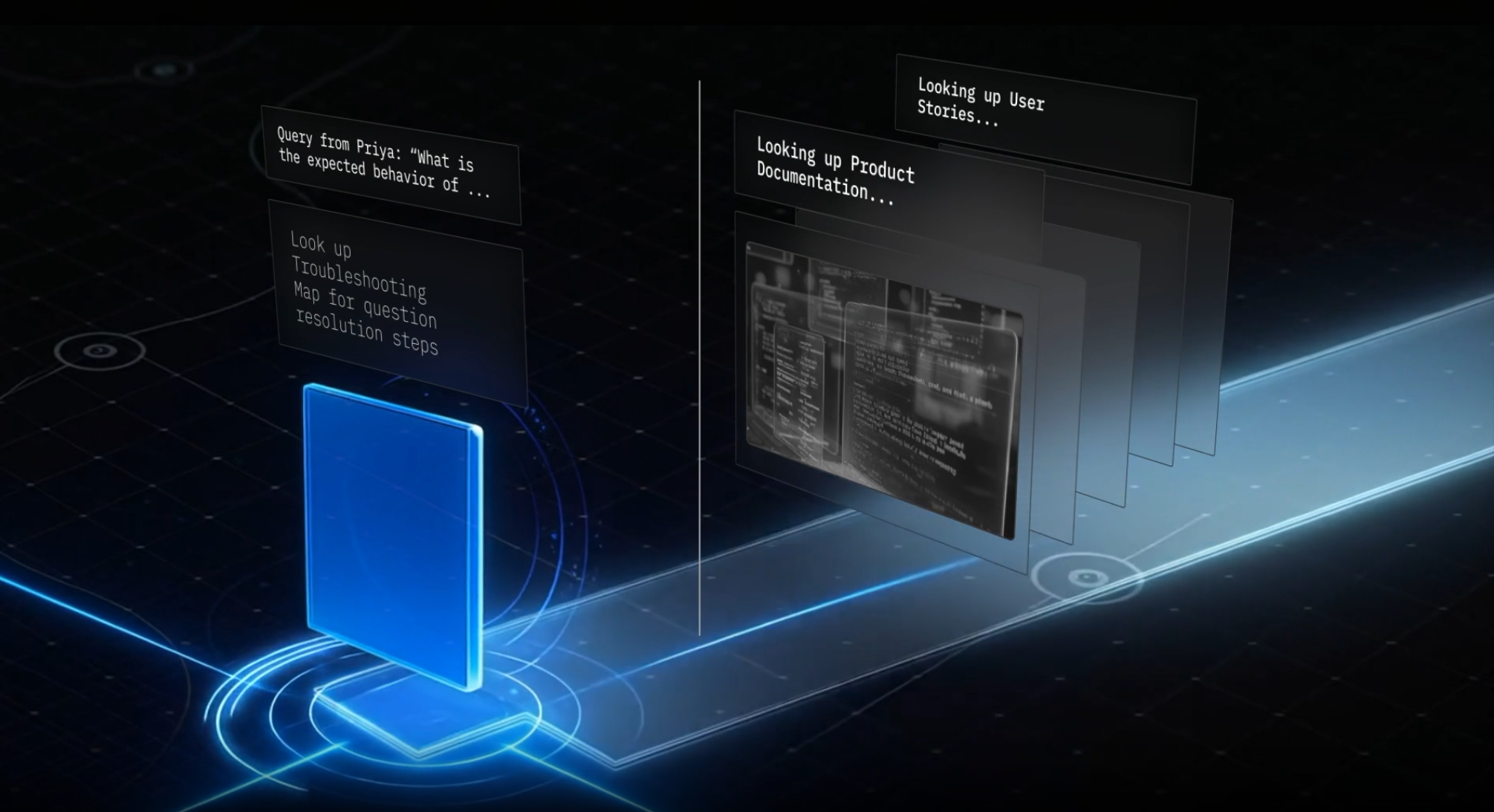
This proactive approach creates a win-win scenario: not only do organizations achieve better-documented tickets for audit and knowledge purposes, but this wealth of information significantly increases the accuracy of the Troubleshooting Map moving forward. When tickets contain comprehensive diagnostic narratives, resolution steps, and verification details, the underlying AI systems can more effectively identify patterns, map issue relationships, and generate actionable recommendations for future similar cases.
Organizational Impact
Systematic completeness scoring generates cascading benefits:
- Documentation Quality Improvement: Objective criteria transform abstract directives into measurable standards
- Knowledge Accumulation: High-scoring tickets function as reusable templates, creating compound returns on diagnostic effort
- Data-Driven Assessment: Quantitative evaluation of documentation capabilities independent of other performance dimensions
- Customer Experience: Reduced time-to-resolution through rapid access to validated solutions
- Documentation Debt Visibility: Aggregate metrics reveal systemic documentation issues for targeted improvements
Conclusion
The Completeness Score introduces systematic quality metadata to historical ticket data, enabling efficient knowledge retrieval, validated solution reuse, visible quality standards, and organizational learning. This transforms support operations from an experience-based model (knowledge in individual memory) to a documented model (knowledge systematically captured and retrievable).
The cumulative impact: reduced resolution times, decreased duplicated effort, improved knowledge transfer, and systematic accumulation of institutional expertise in retrievable, actionable form.
Implementation Note
The completeness scoring system employs AI-based evaluation to automatically assess every ticket against objective criteria: troubleshooting steps, diagnostic artifacts, hypothesis testing, remote session documentation, knowledge base references, resolution steps, and customer confirmation. This automated approach provides scalability that manual review cannot achieve, making historical knowledge systematically accessible for future diagnostic work.
Leave a Reply